

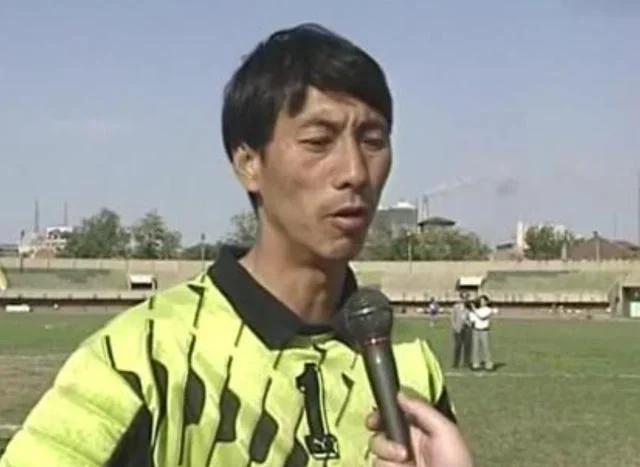
Tianjin football veteran Shi Lianzhi has gone viral thanks to his phrase “peak condition,” and Chen Jianyu, a special commentator from the Chao News client, has weighed in: the true staying power of this meme lies in its rock-solid “spiritual core”—a stubborn refusal to give up in the face of adversity. On a deeper level, it represents a collective psychological massage for the public.
Recently, a 30-year-old video clip suddenly exploded online. In a 1996 interview, former Tianjin football team goalkeeper Shi Lianzhi, speaking in Tianjin dialect, uttered the amusing phrase: “Recently, I’ve been training to restore my body to its peak condition.” No one expected that three decades later, this line would become an internet sensation, widely mimicked by young people.
To decode this online frenzy, we must first look at its appeal in sound and appearance. The internet’s propagation logic often begins with sensory stimulation. Shi’s phrase gained traction primarily due to the charm of his dialect. His authentic Tianjin accent, combined with his slightly defiant expression at the time, led netizens to jokingly mishear “peak condition” as “drunk driving condition.” This regional freshness and humor formed the initial spark for mass sharing. People imitate first the tone, the crisp delivery, a kind of harmless joy that easily spreads across social circles.

But mere surface humor is not enough. What gives this meme lasting vitality is its tough “spiritual core”—a resilience that refuses to accept defeat in low times. Today’s young enthusiasts mostly haven’t watched Shi play or even heard his name. Yet through fragmented information, they learn that in 1996, Shi was in a dark moment, suspended for six games with his career hanging by a thread. In an era without filters or PR scripts, facing the camera, he didn’t show despair; instead, he lifted his chin and declared he would prove himself “the best goalkeeper in China.”
This near “blind” confidence under pressure feels rare and precious to today’s young people, accustomed to intense competition and anxiety. What they embrace is not the specific football incident, but the attitude of rising from setbacks—patting off the dust and saying, “I can do it.” Shi kept his word: after returning, he delivered multiple outstanding performances, helping his team avoid relegation and becoming a strong contender for the title of best domestic goalkeeper in fans’ eyes.

The report suggests that on a deeper level, the revival of “peak condition” is essentially a collective psychological massage for the public. In today’s social environment, young people often talk about pressure: the 35-year-old career ceiling, the frenzy of civil service and graduate exams, workplace burnout, and the tug-of-war between striving and lying flat. Many live in a state of “tense fragility.” In this context, Shi’s phrase provides an emotional outlet and a starting point for action. This old saying acts like a “spiritual log” in the flood of anxiety, offering a firm grip. It tells us that no matter how bad things are, we can still regain control of our lives by adjusting our body and mindset.
What’s even more touching is the subject’s own pursuit of “peak condition.” Now 62, Shi has long left the national team, but after retirement, he has trained several national-level goalkeepers. Though he left professional football, he still plays weekly for a veteran team and volunteers to coach young players. Facing sudden fame, he refused commercial offers for the rights to his phrase, humbly saying, “It’s not me who’s famous, it’s the words.”
Thirty years have changed football and the world, but the deep human desire to control fate remains unchanged. Shi Lianzhi and his “peak condition” have found a second spring, reminding us: brush off the dust, stand up, and life must go on—and to live it brilliantly.
